Titanium is a review platform for hospitality that runs on hardware I make. Someone taps a station on the counter. If they’re happy they go to Google; if they’re not they reach the owner privately while they’re still in the building, with the Google link on screen either way.
Behind it sits a dashboard for every site: league tables, complaint themes, the drafted replies, and a weekly report an owner can read in two minutes.
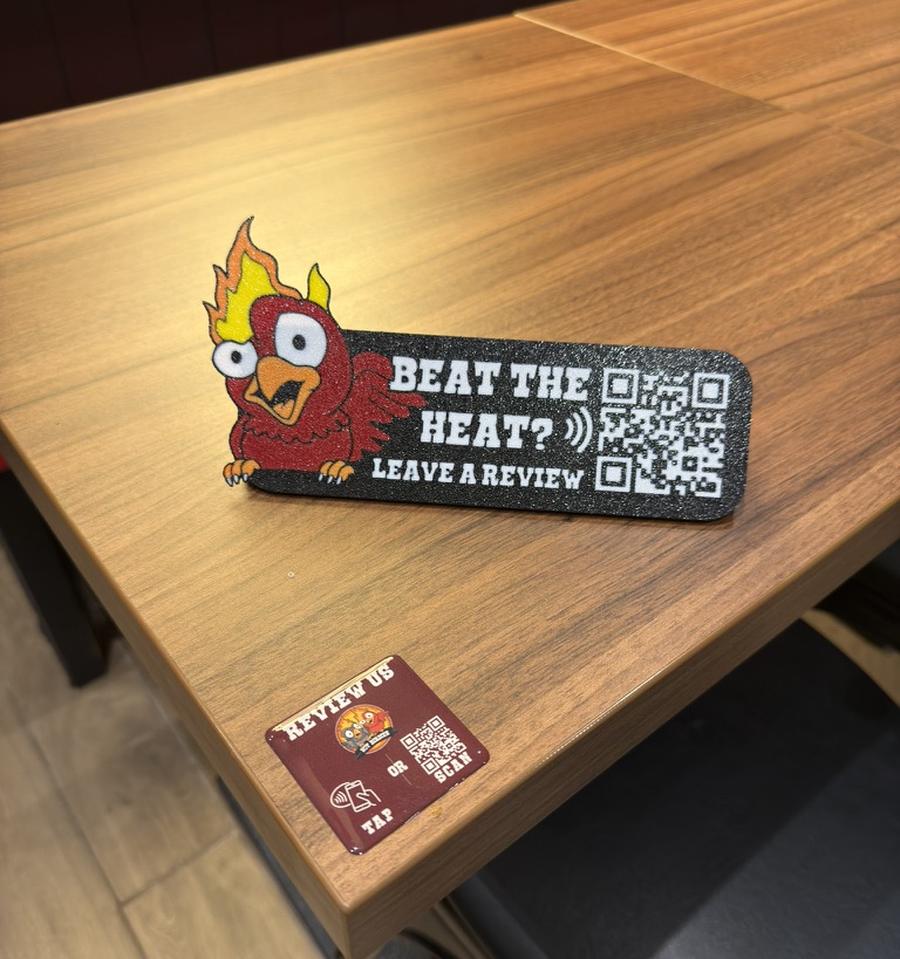
Why the hardware matters
The stations are modelled and printed here, per client, with their branding and nobody else’s logo on them. That sounds like a detail until you watch one sit on a counter for six months. A generic plastic stand with a vendor’s name on it gets moved behind the till. Something that looks like it belongs to the business stays where the customers are.
Catching the complaint before Google does
The whole design turns on one moment: an unhappy customer, still in the building, deciding whether to say something or just leave and write it up later. Routing that person to the owner privately — without hiding the Google link — is the difference between a complaint you can fix and a one-star review you can only reply to.
One owner ran two branches side by side for five weeks. The one with Titanium went from 3.1 to 4.2 stars and grew its reviews by 106%. The other grew 5%.
A single comparison between two sites, not a network average.
Built alone, on purpose
The platform, the AI, the payments, the contracts and the selling are all mine. That isn’t a boast about stamina — it’s why the reply engine and the hardware fit each other, and why a change to one doesn’t need a meeting with the people who own the other.
All work