A house in Leyton ran its lighting on Rako, a proprietary control system. Thirty-odd circuits, every light in the building behind it. Then it died.
Nobody would take the repair on. A dead proprietary system with no surviving documentation is awkward, unglamorous work, and the safe quote is always to rip it out and start over. So it sat. The owner, an elderly man, lived off the emergency lighting instead. For years.
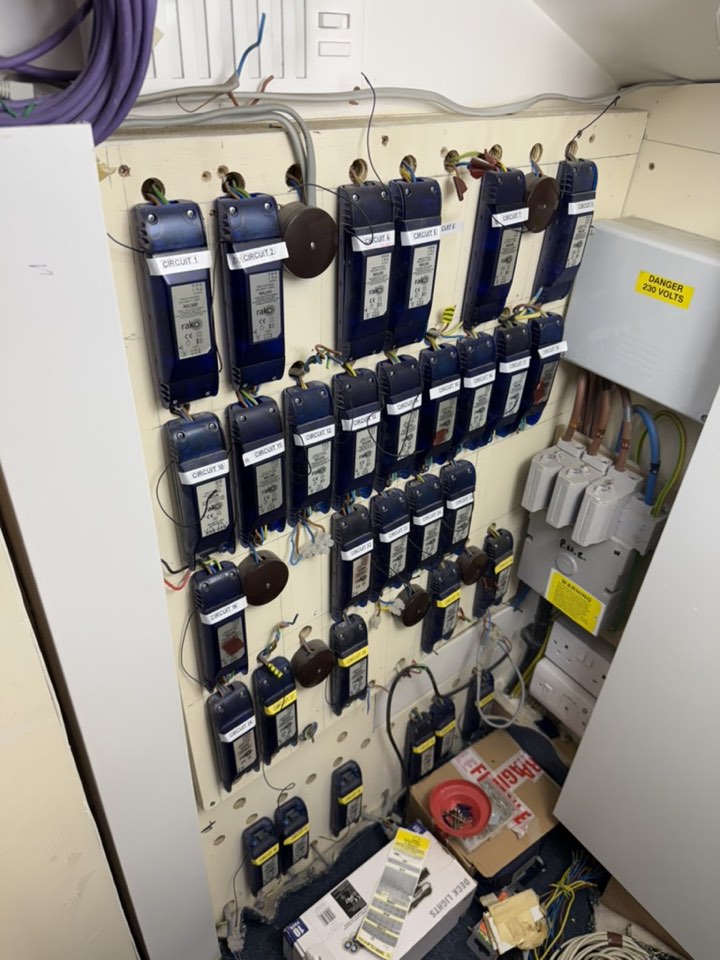
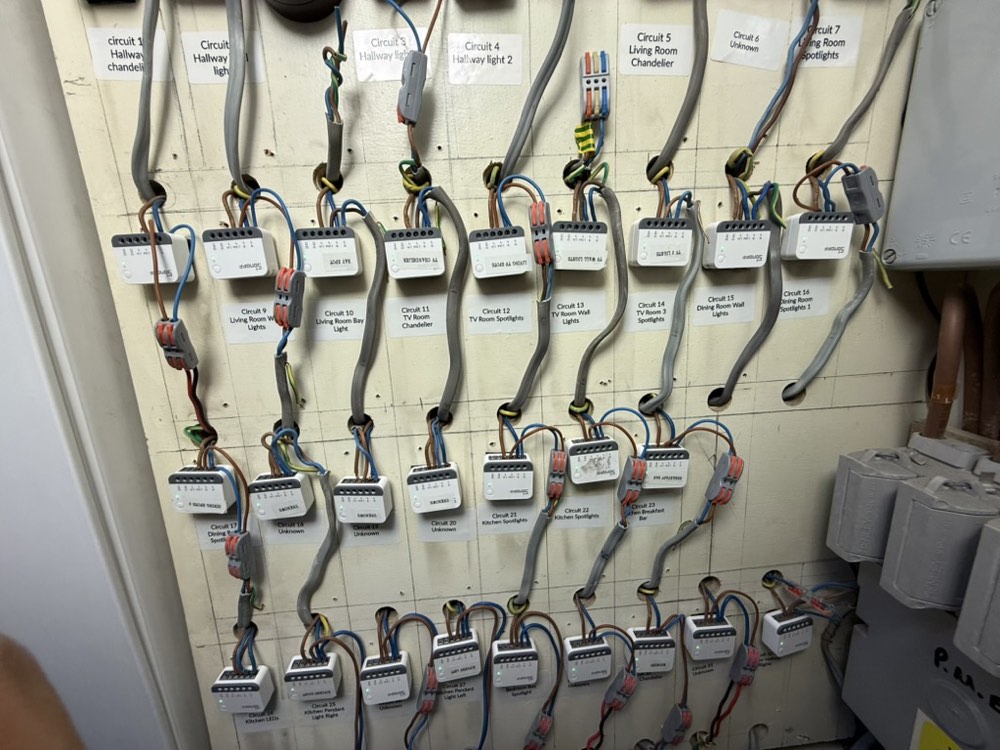
Keep the wiring, replace the brain
Every dead Rako module came out and a Zigbee relay went in on the same circuit, each one labelled with the room it actually controls: hallway chandelier, living room bay, kitchen pendants. The original paperwork was long gone and I wasn’t going to leave the next person guessing.
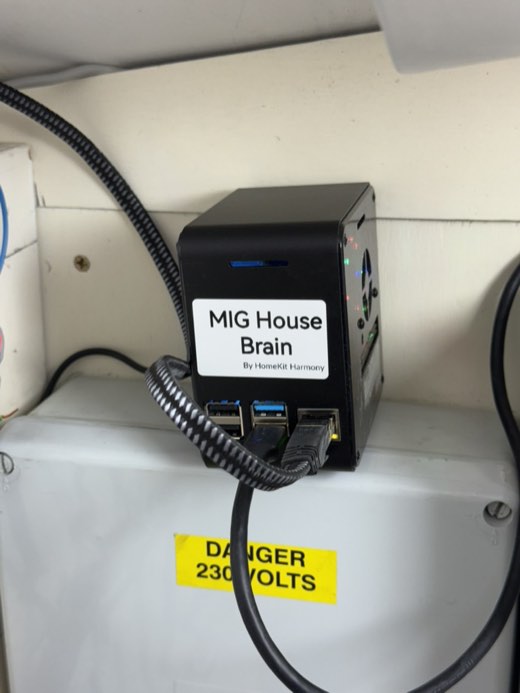
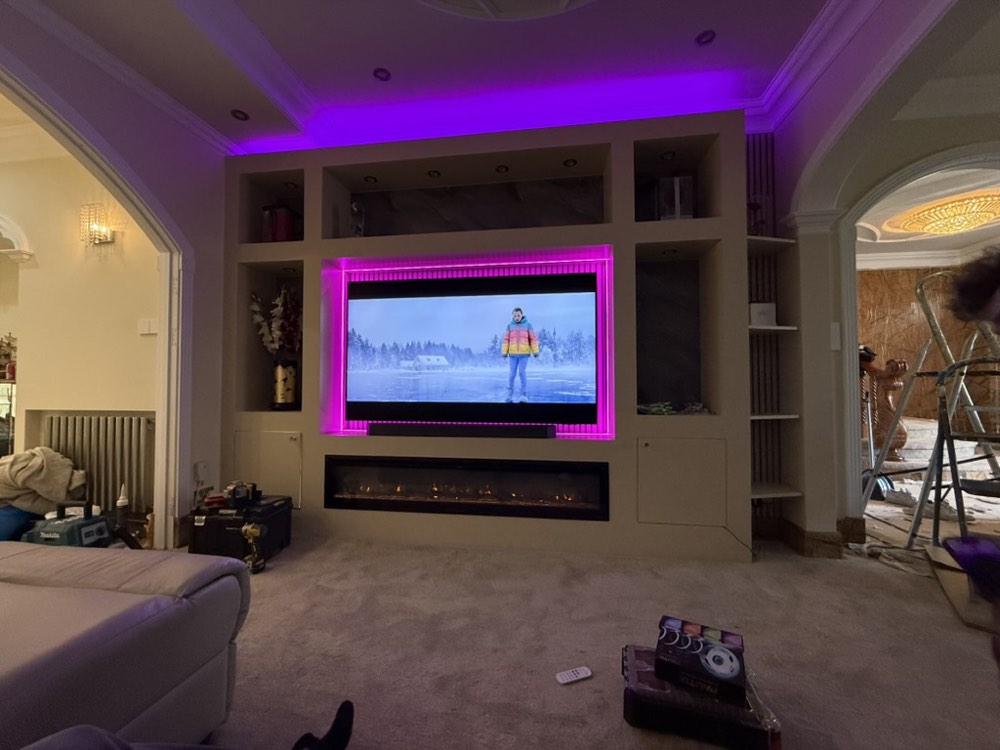
A Raspberry Pi running Home Assistant took over as the controller. I put in gigabit Wi-Fi so the mesh had something solid underneath it, then built the media wall in the living room and brought that onto the same system.
Working lights were the floor, not the job
A switch on a wall is still something a person has to think about, and this owner is elderly, which is most of the reason the dead system went unmentioned for as long as it did. So the house got told how to decide.
The lighting runs off sun elevation and local cloud cover rather than a clock, so an overcast afternoon in February and a bright evening in June get different answers at the same time of day, and the house comes up gradually rather than snapping on. The blinds work to the same logic: down against low sun on the front elevation, open when the room would otherwise want a lamp. A camera on the driveway reads number plates, so the gate opens for the cars that live there and stays shut for everything else — which matters more than it sounds when opening it used to mean walking out to it.
None of that is a smart bulb in an app. Nobody in the building operates anything. It makes its own decisions off its own inputs, and the only time the owner touches it is when he wants something other than what it chose.
The house came back, and then it got cleverer than it had ever been. It runs on open standards now, so no supplier can switch it off again, and not one circuit had to be rewired.
It started as a system I built for my own home.